
Best CRM for Small Business: Zoho vs HubSpot vs Salesforce vs Bespoke
Zoho, HubSpot, Salesforce or something built for you? An honest look at the pros and cons, and how to pick the best CRM for a small business.
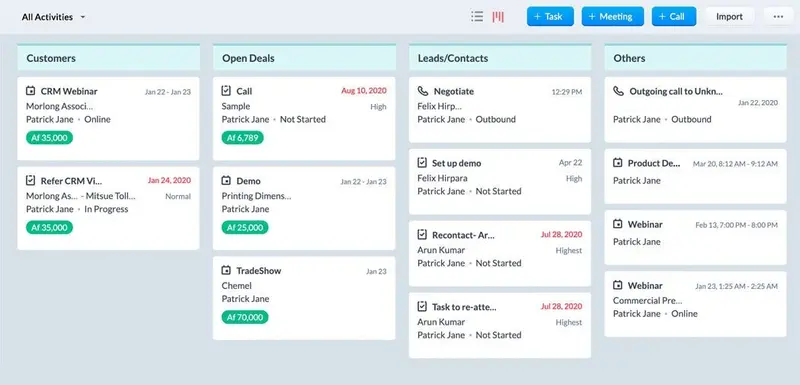
Every few months a mate texts me the same question: which is the best CRM for a small business? My answer changes every time, because "small" covers a two-person agency sharing an inbox and a fifteen-person sales team with a director who wants a dashboard by Friday.
I run a company that helps other businesses improve how they work, and software decisions land in most of those projects.
Here's what I've learned about the four options that come up most: Zoho, HubSpot, Salesforce, and getting something built for you.
What actually matters when you choose a CRM
Before the logos, the questions. Answer these and the shortlist usually picks itself.
The real price per seat. The headline fee is rarely the whole bill. Price the tier you need, not the cheapest one.
Who has to use it. If your salesperson won't log a call, you've bought an expensive address book.
Setup in days, not months. Ask what works out of the box and what needs a consultant.
How it joins your other tools. Email, accounts, quoting, website forms, your phone.
Exit. Can you export everything? Ask before you sign, not after.
One more warning about pricing pages: the number at the top is usually the starter tier, and the features that sold you the demo often sit two tiers up. Write down the three features you actually need, then check which tier includes all three before you compare costs.
Zoho CRM: pros and cons
Zoho is the value option, and it's a lot of software for the money. Entry pricing sits below the others, and there's a free edition for very small teams, though it's limited. Around it sits a wide suite: Books for invoicing, Desk for support, Campaigns for email, Mail for inboxes.
Pros
Low entry cost, with tiers priced around [£50 per user per month].
One supplier for CRM, invoicing and support if you buy into the suite.
Plenty of standard features: pipelines, workflows, quotes, reports.
Cons
The settings are sprawling. Budget a full month for setup, not an afternoon.
The features you actually want, like multiple pipelines and deeper automation, often sit a tier or two up.
The documentation assumes some patience.
Best fit: a business watching every penny that will put the hours in to configure it properly.
HubSpot: pros and cons
HubSpot is the one I'd point most small teams at first. The free tier is genuinely usable rather than a 14-day tease, and the interface is the cleanest of the four.
Pros
A free CRM tier you can run a small sales team on.
Strong on the marketing side: forms, landing pages, email, and a content view of your pipeline.
Quick to start. You can import contacts and be working the same afternoon.
Cons
Costs climb as you add contacts and move up the tiers, often faster than people expect. Budget for £60 plus once you're on a paid tier.
The bundle nudges you towards marketing, sales and service hubs you may not need.
Contact-based pricing punishes a business with a big list and a small team.
Best fit: businesses where marketing and sales are the same two people, and the list is growing.
Salesforce: pros and cons
Salesforce is the most capable of the three off-the-shelf options, and the most work. It's built for sales organisations with process, reporting, and someone whose job is to look after it.
Pros
Deep configuration. It can be shaped to fit a process rather than the other way round.
Reporting and forecasting that hold up as a team grows.
A large pool of trained people, which matters when you hire or need help.
Cons
Realistically you need an admin, internal or paid. That cost usually outweighs the licence for a team of five.
Development comes at significant cost.
Even a simple setup takes weeks to do well.
Every change needs thought, so small teams stall.
Best fit: a sales team with a sales ops person, or a business planning to double headcount in the next year or
Whatever you choose, drop me a message if you need anything.



Join the conversation
Have a thought to share? Leave the first reply below.